
Additional Information:
Early Life and Flying Training
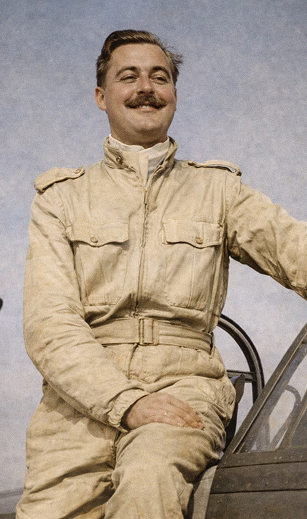
Neil Campbell was born in St. Thomas, Ontario, on 24 June 1916. In 1938, he began flying at the London, Ontario Flying Club, where he obtained his civil pilot's licence.
Later that year, he applied for a short service commission in the Royal Air Force, joining a number of Canadian pilots who sought to serve overseas as the situation in Europe became increasingly uncertain.
Training and Early Service
Following his training in Britain, Campbell was posted to No. 32 Squadron at RAF Wittering, arriving on 24 May 1940.
On 3 June, he was transferred to No. 242 Squadron at RAF Biggin Hill. Shortly afterwards, on 8 June, he deployed to France with the squadron to support British forces during the final stages of the campaign, as the British Army withdrew towards the Atlantic coast.
Operations in France and Britain, 1940
Following the withdrawal from France, No. 242 Squadron returned to Britain and resumed operations by mid-July 1940.
During the Battle of Britain, Campbell took part in fighter operations over southern England. On 15 September 1940, he damaged a Dornier Do 17 bomber during combat.
On 18 September, he claimed two Junkers Ju 88 aircraft destroyed, shared in the destruction of another, and damaged a fourth during combat operations.
These actions took place during a period of sustained air combat, as RAF Fighter Command defended Britain against continued Luftwaffe attacks.
Final Mission - 17 October 1940
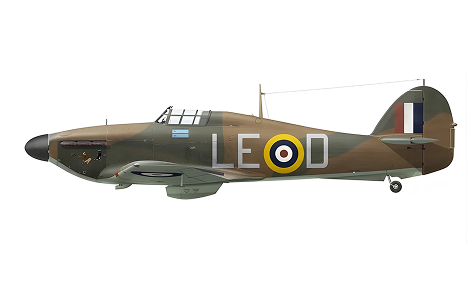
On 17 October 1940, Campbell was flying Hawker Hurricane V6575 during operations off the Norfolk coast near Yarmouth.
His aircraft crashed into the sea, possibly after being hit by return fire from a Dornier Do 17 engaged during the sortie.
Burial and Legacy
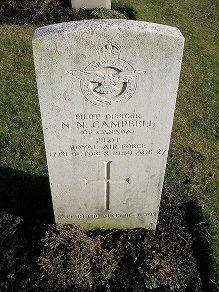
His body was later recovered, and he was buried on 31 October 1940 at Scottow Cemetery, Norfolk, England.
Pilot Officer Neil Campbell is remembered as one of the Canadian pilots who served with the Royal Air Force during the Battle of Britain, taking part in both the fighting in France and the defence of Britain during 1940.